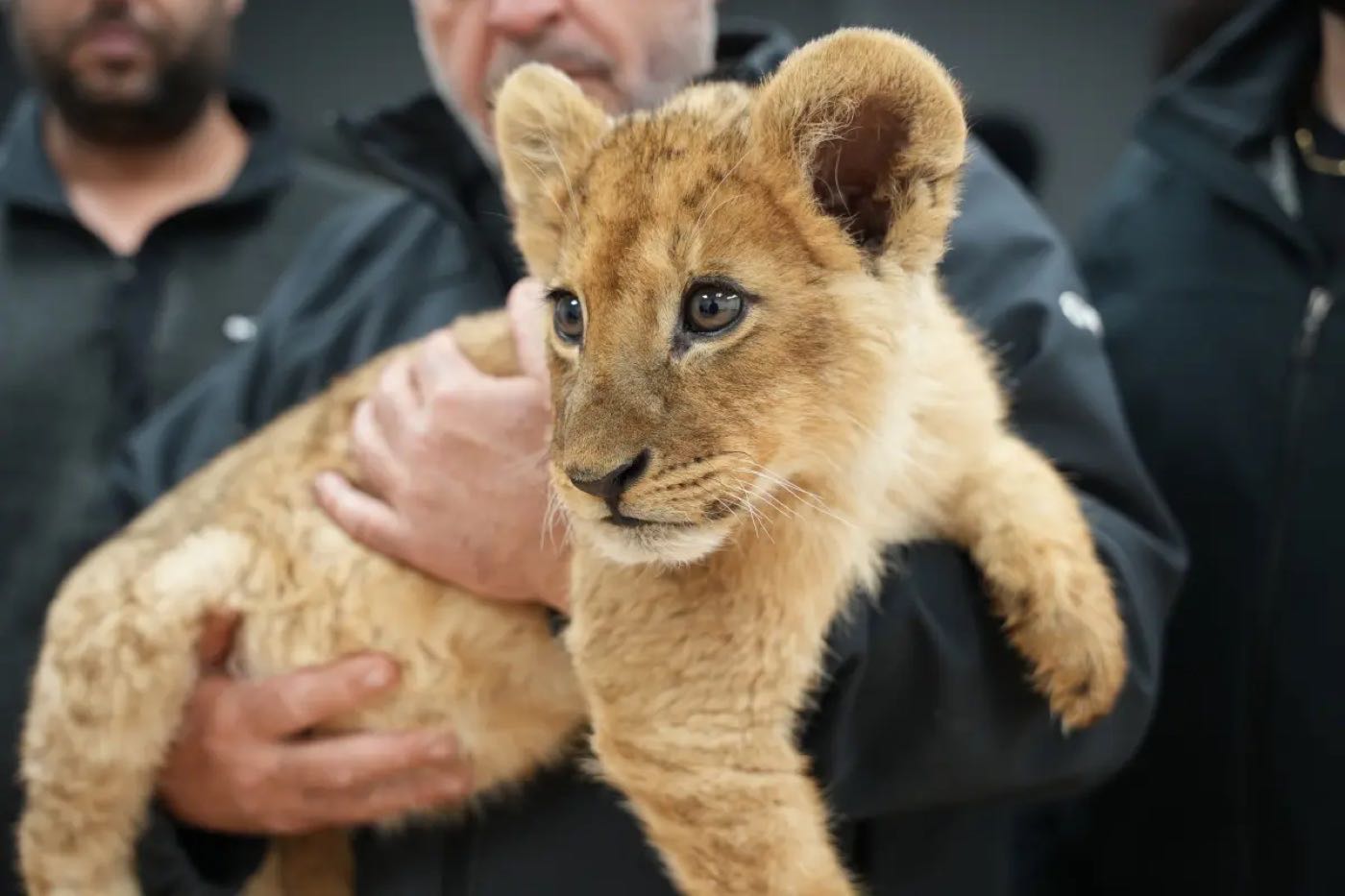
Between March and August 2025, the Israel Nature and Parks Authority (INPA) confiscated six lion cubs from illegal private keeping. Every one had been removed from its mother early, almost certainly hand-reared on milk replacer, and shaped to treat people, not other lions, as food, safety and social partner.
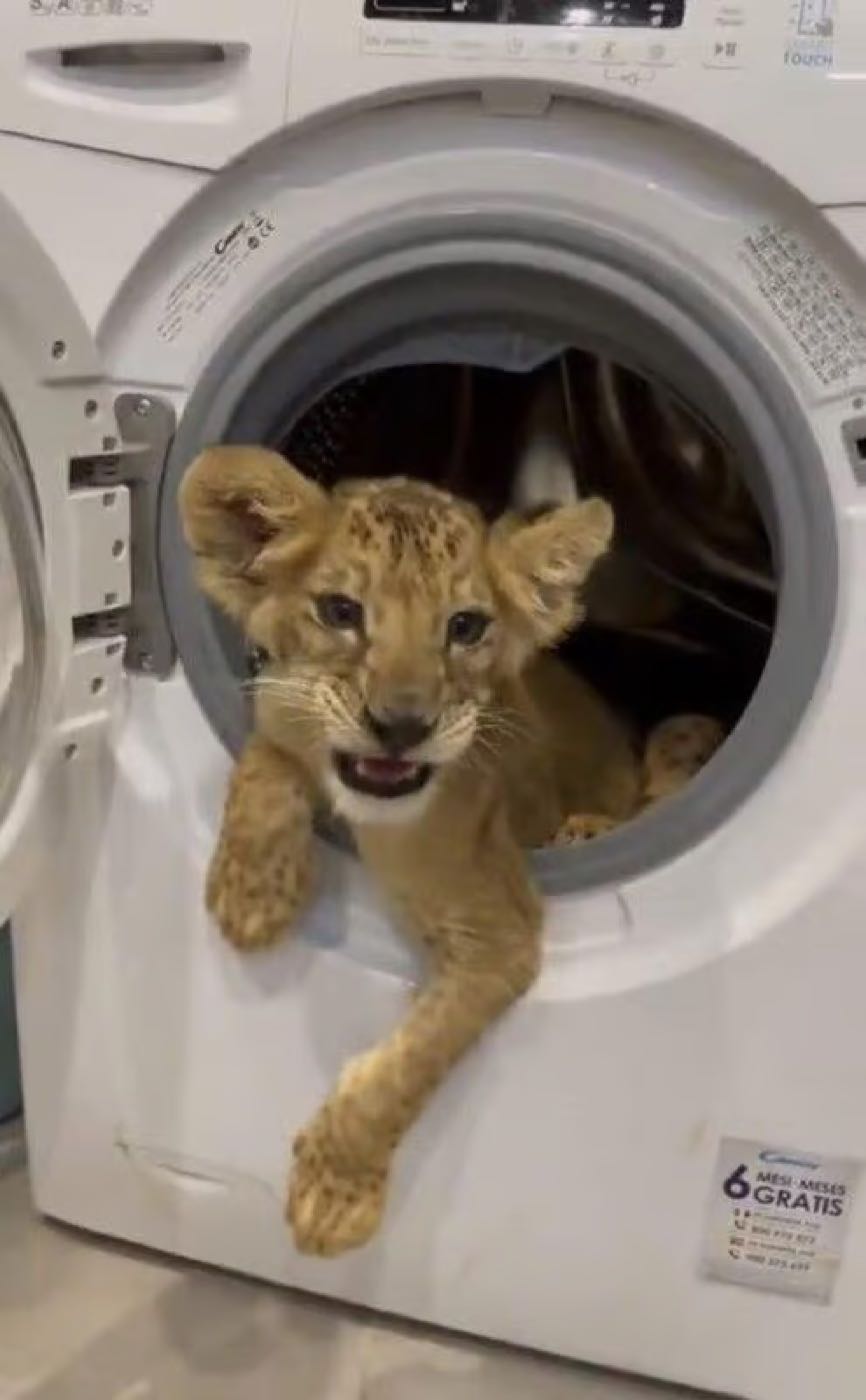
A cub in a washing machine
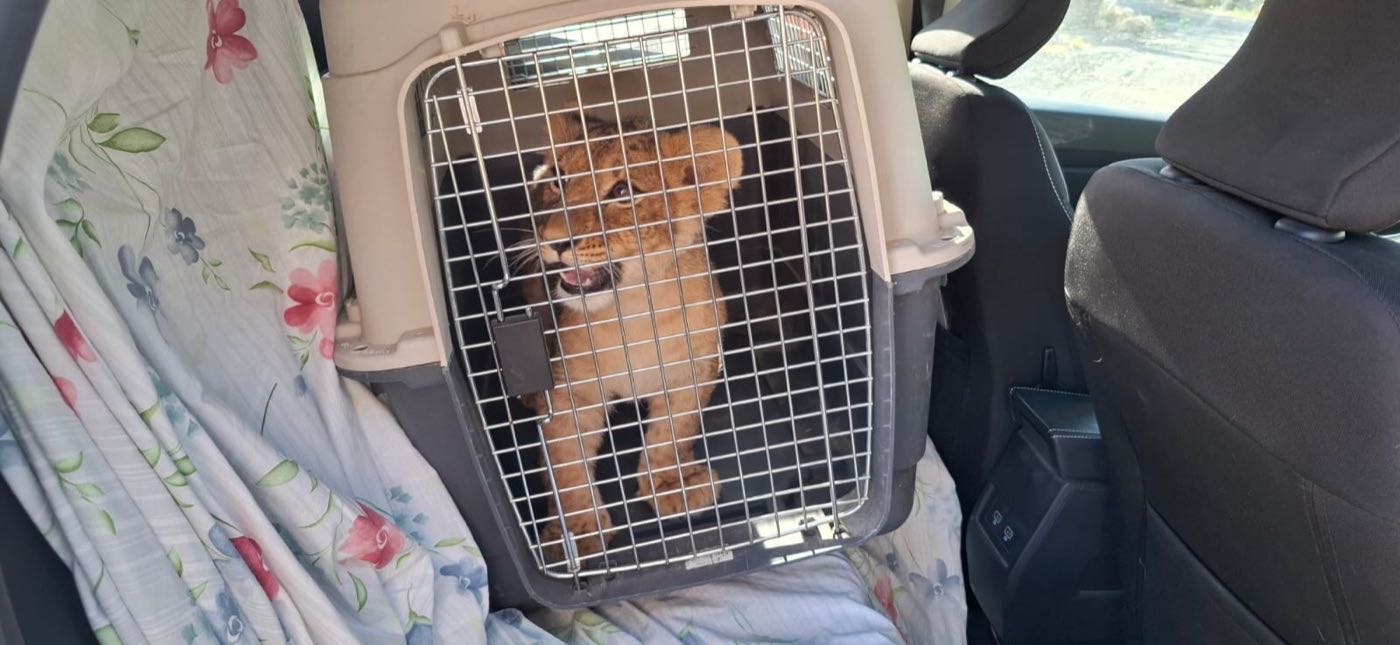
The cubs surfaced in living rooms and back seats, kept as status symbols. They arrived with skin disease, lameness and behavioural disturbance: the predictable cost of an inappropriate diet and of social isolation from other lions. This is what the illegal trade in trophy pets actually looks like.
Photo · INPA
Human-oriented, not wild
Classical imprinting is a bird model; in lions the operative terms are the socialisation window, habituation and human-orientation. These cubs were not human-oriented by choice; people had simply become their whole social world. Undoing that, safely, became the work.
Photo · Amram Tsabari / INPA
02 · Who did what
Confiscation, rehabilitation, handover
Three institutions, three distinct jobs. Enforcement and placement created the conditions; the rehabilitation itself was designed and delivered by the zoo.
INPA frame
INPA confiscated six lion cubs from illegal private keeping in Israel, with staggered intakes from March to August 2025. The case illustrates demand for trophy pets and the illegal wildlife trade. Enforcement and placement at the zoo created the conditions for behavioural rehabilitation; the rehabilitation itself was designed and delivered by the zoo. Two males were later transferred to a sanctuary for lifelong care. They were not released to the wild.
Poster text, section 2 - INPA frame
INPA
Israel Nature and Parks Authority
confiscated six lion cubs from illegal private keeping in Israel, with staggered intakes from March to August 2025
held CITES and the remaining formal requirements
sourced the aircraft
supplied the crates
Sections 2 and 5.1
Hai Park
Zoo Veterinary and Keeper Team
the rehabilitation itself was designed and delivered by the zoo
crate habituation, vaccines and antiparasitic treatment
Their keeper flew with them.
He remained for several days so that the pair could settle and so that husbandry knowledge could be handed to the ADI keeper.
Sections 2 and 5.1
ADI
Animal Defenders International
ADI handled all contact with the South African authorities.
ADI representatives arrived in Israel a few days before departure.
lifelong sanctuary care in South Africa
Section 5.1
6lion cubs confiscated from illegal private keeping in Israel, staggered intakes March to August 2025
Awaiting INPA
Enforcement figures and legal framework - to be supplied by INPA
03 · Six individuals, two units
Meet our lions
Tap any lion for its file. Success here is not a return to the wild; it is a stable lion-lion bond and an honest destination.
Two males were later transferred to a sanctuary for lifelong care. They were not released to the wild. The zoo group remains one unit with a single male.
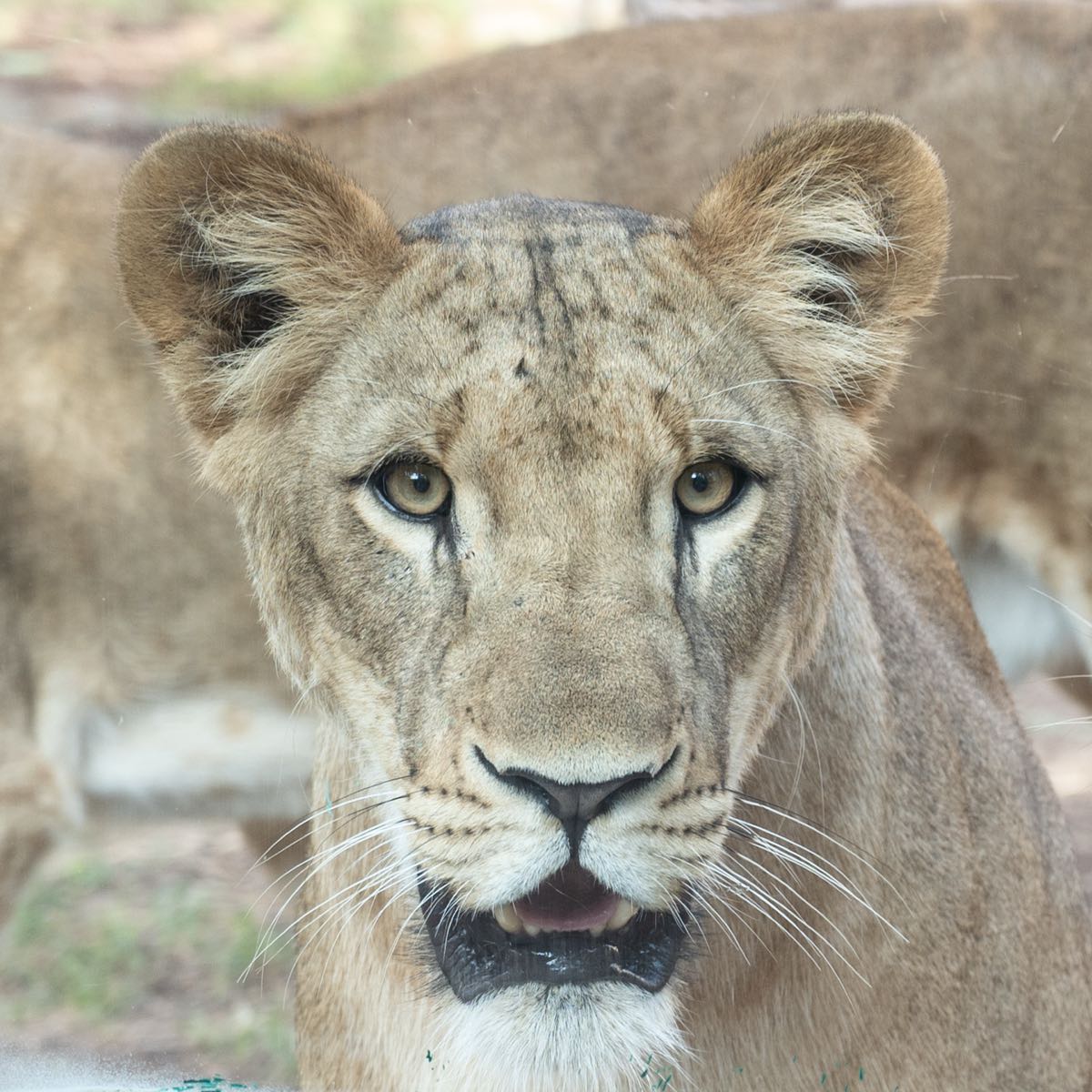
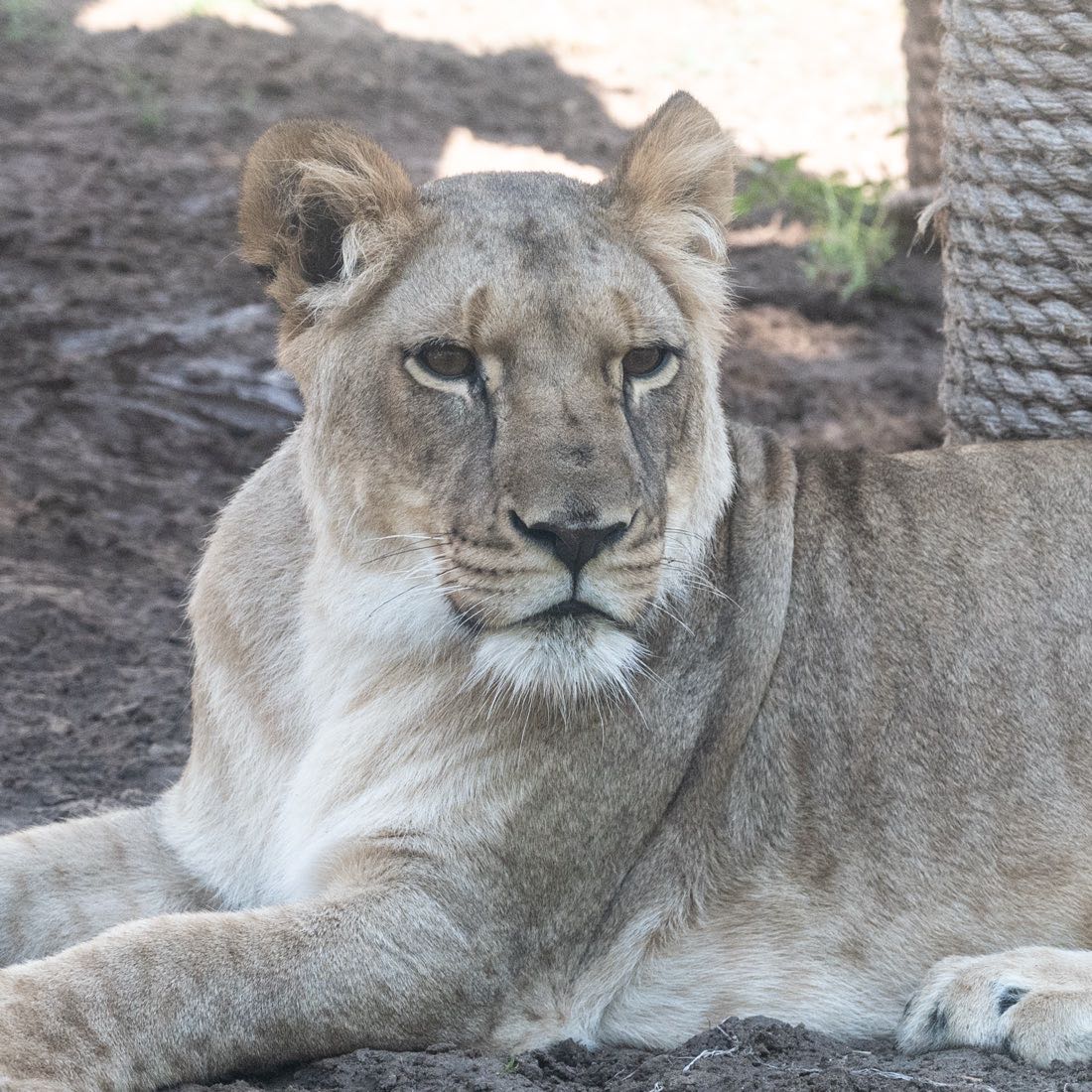
Individual imprint load and coping style did not reset on a common timetable. Photo · Hai Park
04 · The science
A staged behavioural rehabilitation protocol
Dr. Hana's full scientific brief - the confiscation, the staged rehabilitation, the diet, the transfer and the references - is presented as an interactive booklet, exactly as written and nothing softened. Open it to read the complete document.
Hand-reared cubs recruit care. The protocol did not require those keepers to stop experiencing attachment. It required them not to spend it.
Managing keeper emotion was one of the experimental conditions, not an occupational footnote.
Daily care was restricted to one keeper and one assistant. The restriction produced a predictable intra-institutional cost: curiosity, informal competition for proximity, and low-grade jealousy among keepers. It never required formal intervention.
Sentences verbatim from the scientific brief
The Transfer · not a repatriation
06 · Ori & Ben Tzur → ADI, South Africa
Handover, not homecoming
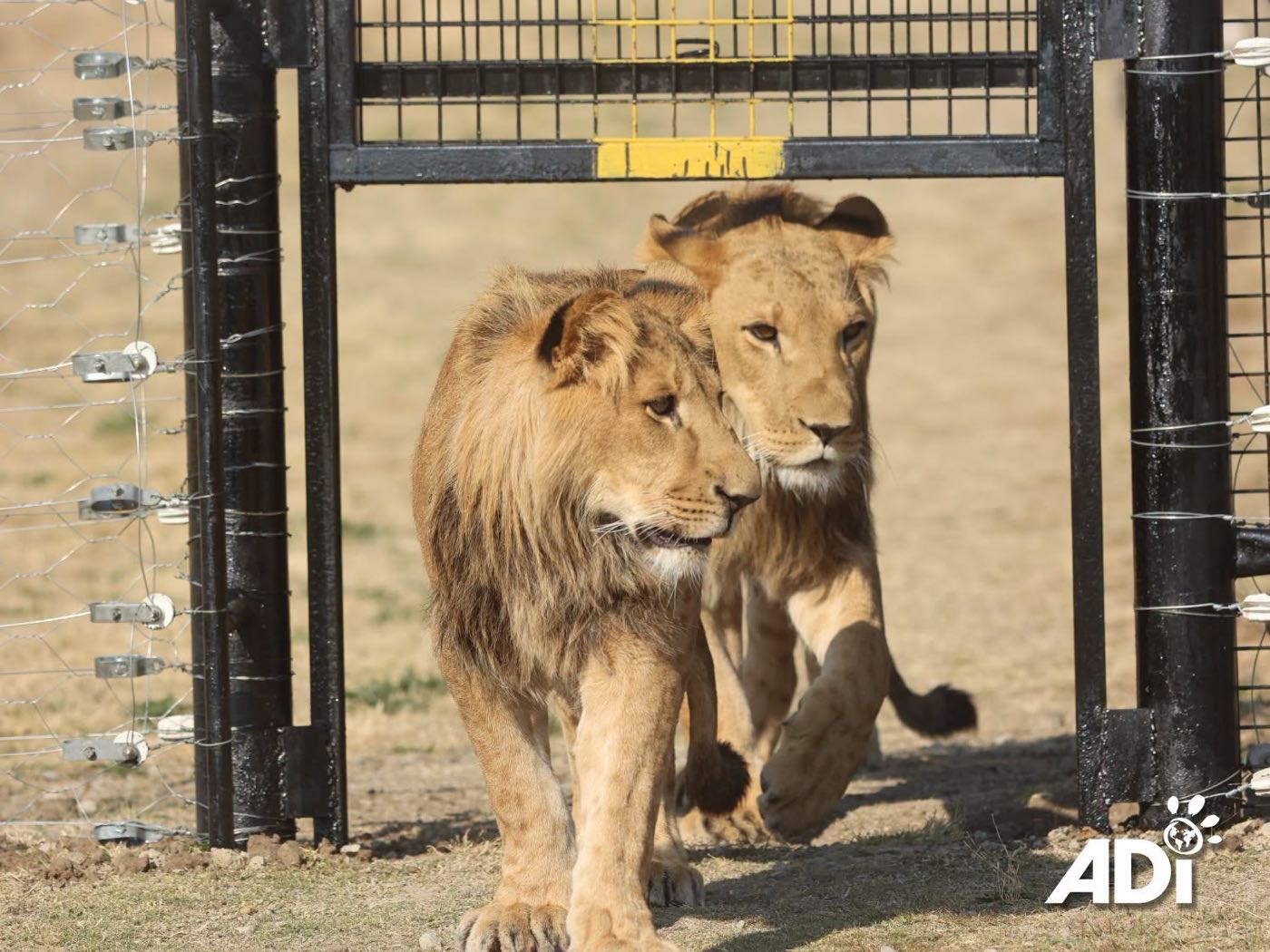
Two males, bonded into a coalition, were handed over to Animal Defenders International (ADI) for lifelong sanctuary care: a joint operation under wartime constraints, and without a single sedative.
2lions
0sedation
1keeper aboard
Route: Ben Gurion to Cairo to Frankfurt to Johannesburg.
Crate habituation, no sedation
Food was placed in the transport crates; entry and exit were unconstrained. Sedation and tranquilising agents were never considered: an unmonitored recovery in flight is an unacceptable risk, and arrival under the effect of tranquillising agents would have complicated introduction to the new enclosure.
A complicated routing
Ongoing hostilities in the Middle East made the transport unusually complicated. INPA held CITES and the remaining formal requirements, sourced the aircraft and supplied the crates; ADI handled all contact with the South African authorities. Cairo, Frankfurt and Johannesburg were the only routing that could be made to work.
The one familiar scent
Their keeper flew with them. That was not a courtesy. After a long routing the only familiar sight and scent when the crates opened was his. He received them from the crates, they were held indoors overnight, and the next morning he walked them into the new yard. He remained for several days so that the pair could settle.
An honest destination
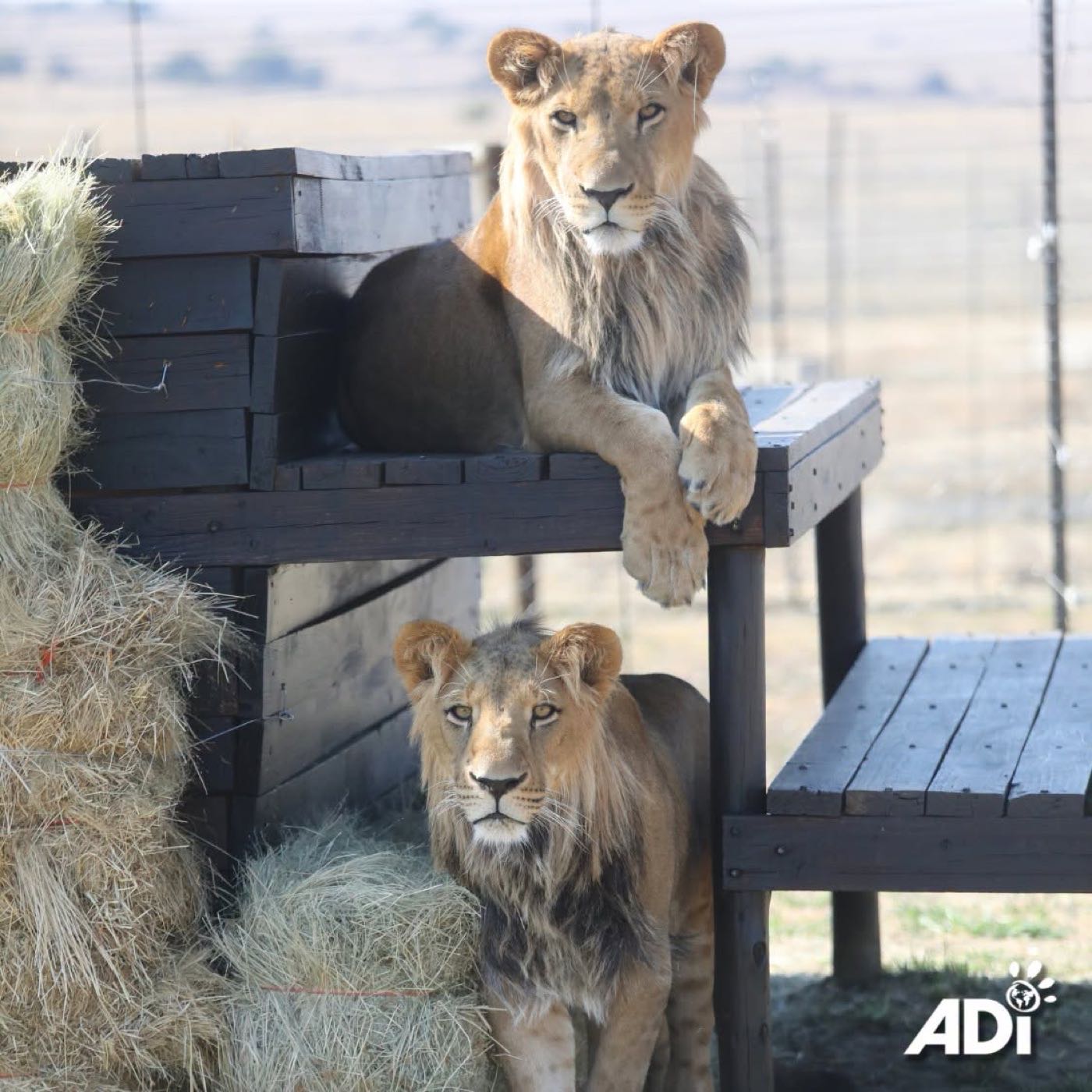
The transfer is not a repatriation: natal origin is unknown, and sanctuary husbandry is not release.
Photo · ADI
Photo · ADI
07 · Take-home
Limit people.
Feed like lions.
Put conspecifics first.
Measure success as a stable lion-lion bond and an honest destination - sanctuary or zoo group - not as a return to the wild.
Rewilding would have required them to treat people as a threat. They still treat people as relevant. Sanctuary care requires them to live as lions with each other under continued human logistics. Those are different tasks.
Hai Park Kiryat MotzkinIsrael Nature and Parks Authority · EAZA Paris 2026
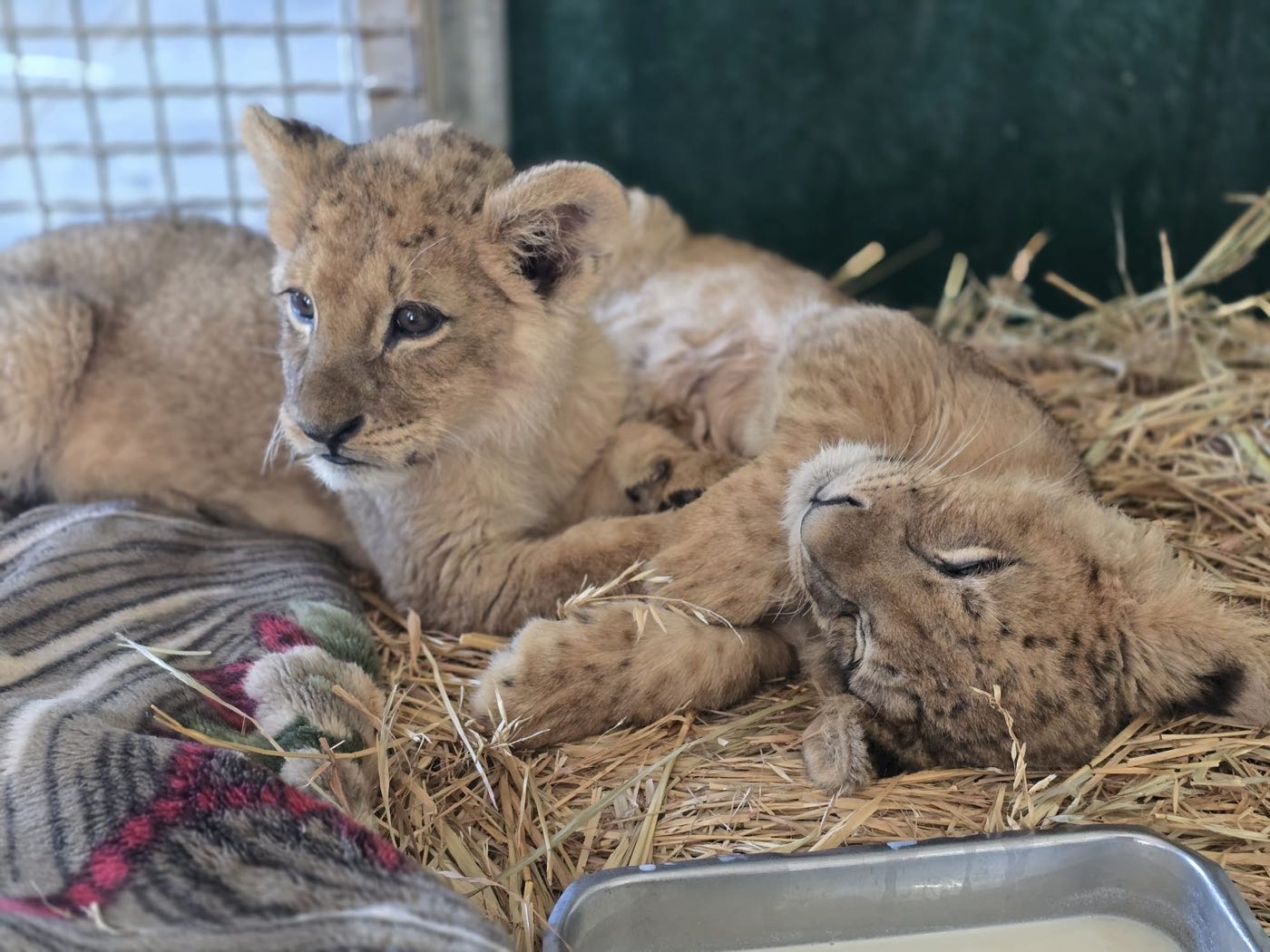
Two cubs, one asleep. Photo · Yaron Cohen & Shahar Kara, INPA
08 · Watch
Video
Footage of the rescue, the rehabilitation and the journey, embedded from YouTube once uploaded.
09 · The full image set
Gallery
Every photograph, grouped into albums. Tap to enlarge.
Image credits: Israel Nature and Parks Authority (INPA) · Yaron Cohen & Shahar Kara, INPA · Amram Tsabari, INPA · ADI Wildlife Sanctuary · Hai Park Kiryat Motzkin.
10 · In the news
Covered in the press
The rescue and the transfer to South Africa drew coverage in Israel and abroad.
Cite as: Hai Park Kiryat Motzkin Zoo Veterinary and Keeper Team; Israel Nature and Parks Authority (2026). De-imprinting Confiscated Lion Cubs: Combating Illegal Wildlife Trade and Trophy Pets in Israel. Poster, EAZA Annual Conference, Paris, September 2026. Terminology follows the brief: transfer / handover, conspecific socialisation, hypovitaminosis A - not repatriation or rewilding.
Hai Park Kiryat MotzkinZoological collection · Kiryat Motzkin, Israel
INPA
Israel Nature & Parks AuthorityConfiscation & enforcement
ADI
Animal Defenders InternationalLifelong sanctuary care · South Africa
Working document · Dr. Hana
Working document · Dr. Hana
De-imprinting Confiscated Lion Cubs
From human-oriented cubs to conspecific social units - a staged behavioural rehabilitation protocol.
Combating Illegal Wildlife Trade and Trophy Pets in Israel. Authors: Zoo Veterinary and Keeper Team; Israel Nature and Parks Authority (INPA).
↔ Swipe or use the arrows to turn the page
Terminology. Prefer human-oriented / human-imprinted, staggered intakes, conspecific socialisation, behavioural rehabilitation, hypovitaminosis A, and transfer / handover. Do not use repatriation or rewilding as achieved outcomes. Classical Lorenzian imprinting is a bird model; in felids the operative terms are socialisation window, habituation and human-orientation.
2 · INPA frame
INPA confiscated six lion cubs from illegal private keeping in Israel, with staggered intakes from March to August 2025. The case illustrates demand for trophy pets and the illegal wildlife trade. Enforcement and placement at the zoo created the conditions for behavioural rehabilitation; the rehabilitation itself was designed and delivered by the zoo. Two males were later transferred to a sanctuary for lifelong care. They were not released to the wild.
3 · The problem
Six confiscated lion cubs (Panthera leo; genetic indication P. l. leo, natal origin otherwise unknown) arrived in staggered intakes. Four animals, estimated at three to four months of age, arrived over approximately one week in March 2025: Ori (male, 5.0 kg at intake), Arnon (male, approximately 11 kg), and Yahalom and Bibas (females, approximately 12 kg each). Anada (female), of similar age but with a longer history of human exposure and isolation from conspecifics, arrived in late April; 35 kg on 29 June 2025 is the first reliable weight, not an intake mass. Ben Tzur (male), judged a few months older, arrived in the first week of August at an estimated 50 kg (98 kg on a calibrated scale, 18 February 2026). He had been found tied to a tree on a short rope and was in poor condition.
All cubs had been removed from their mothers early and had almost certainly been reared on milk replacer. They were human-oriented to varying degrees: people functioned as food, safety and social partner. None had a functional relationship with conspecifics. Skin disease, lameness and behavioural disturbance were present and were interpreted as consequences of an inappropriate diet and of social isolation from other lions.
Individual
Sex
Intake
Body mass
Outcome
Ori
M
March 2025, first of the week
5.0 kg at intake
Femoral greenstick fracture early July 2025. Coalition with Ben Tzur → ADI sanctuary.
Arnon
M
March 2025, later in the same week
~11 kg at intake
Most settled male in the zoo group.
Yahalom
F
March 2025, same week
~12 kg at intake
Food-guarding, displacement. Remains in zoo group.
Bibas
F
March 2025, same week
~12 kg at intake
Settled. Remains in zoo group.
Anada
F
Late April 2025
35 kg on 29.6.2025 (first reliable weight)
Longest human exposure; anxious, withdrawn. Remains in zoo group.
Ben Tzur
M
First week of August 2025
~50 kg estimated at arrival; 98 kg on 18.2.2026
Tied to a tree; highly human-oriented. Coalition with Ori → ADI sanctuary.
The group was later divided for structural reasons. Ori could not rejoin the main enclosure during fracture rehabilitation. Ben Tzur was larger, fearful of conspecifics, and a risk if mixed with the younger cohort. A second male in the main yard was judged unworkable. They were managed as a separate pair.
4 · Methods
4.1 Conspecific socialisation
The first priority was conspecific socialisation, not the suppression of human-seeking as such. Introductions followed intake order. The March cohort formed a working social unit in a comparatively short time. Withdrawing the social value of humans took longer. Anada, more fearful of lions than of people, was introduced through mesh and then in supervised physical contact. Ben Tzur and Ori followed a separate track: approximately one month of mesh contact while Ori was convalescent, then supervised contact.
4.2 Diet and prevention of hypovitaminosis A
The cubs did not recognise muscle meat or offal as food. For several days intake was possible only with close keeper presence that amounted almost to hand-feeding. Whole-prey items and offal were introduced until voluntary consumption of a species-appropriate carnivore diet was stable. Food was presented as a carcass or keep protocol, not as nursing.
Captive lions fed muscle meat without liver are at documented risk of vitamin A deficiency, thickening of the cranial bones, narrowing of the foramen magnum, and secondary syringomyelia-like or Chiari-like disease (Shamir et al. 2008; Hartley et al. 2005). Liver and other vitamin A-rich tissues were included from the outset. This is framed as prevention, not as treatment of a diagnosed myelopathy.
4.3 Husbandry training and the shape of the day
Protected-contact training ran in a short morning block: recall, approach to the mesh for injection, a stand for inspection of feet and claws, and voluntary entry into a transport crate. Reinforcement was food and a defined cue-response contingency, not tactile contact. After the session the outdoor enclosure was opened. Evening lock-up was a husbandry task only. Most of each 24-hour period was conspecific time.
Figure 1 · The shape of the day
Morning trainingConspecific timeEvening lock-up
Protected-contact training ran in a short morning block; most of each 24-hour period was conspecific time.
4.4 Staff as a controlled stimulus
Daily care was restricted to one keeper and one assistant. Other staff observed when operations required it; they did not visit for interest. The restriction produced a predictable intra-institutional cost: curiosity, informal competition for proximity, and low-grade jealousy among keepers. It never required formal intervention.
The more demanding cost sat with the two people who were permitted contact. Hand-reared cubs recruit care. The protocol did not require those keepers to stop experiencing attachment. It required them not to spend it. Any residual affiliative exchange was confined to the morning training window. As body mass increased and the routine hardened, that remainder lost most of its function.
5 · Results
By August 2025 the main group was already a stable social unit with little friction and was clinically fit for a shared outdoor yard. Pairing Ori with Ben Tzur followed from enclosure structure and welfare, not from a wish to 'send them home'.
Ben Tzur spent the next month in continuous mesh contact with one conspecific. Sight of people still elicited strong contact-seeking and intense vocalisation. Supervised physical contact then proceeded without serious conflict. They formed a coalition in one direction only: Ori used Ben Tzur as cover; Ben Tzur tolerated him and functionally buffered him. Human-seeking declined as they oriented to each other. It was not abolished.
In the weeks before movement both males were trained to enter transport crates without handling. Food was placed in the crates; entry and exit were unconstrained. On the day of travel both animals entered and tolerated closure without chemical restraint. They were handed over to Animal Defenders International for lifelong sanctuary care in South Africa.
The zoo group (Arnon, Yahalom, Bibas, Anada) remains one unit with a single male. Rewilding is not a credible endpoint. Arnon and Bibas are the most settled. Anada remains anxious and withdrawn and requires more work before she trains as readily as the others. Yahalom guards food and displaces conspecifics. Individual imprint load and coping style did not reset on a common timetable. All four participate in husbandry training.
Figure 2 · Who ranks as partnerA change in who ranks as the primary partner: a zoo group of four, and a bonded pair - Ori and Ben Tzur - transferred to the ADI sanctuary.
5.1 Transfer to ADI
Ori and Ben Tzur were handed over to Animal Defenders International for lifelong sanctuary care in South Africa. The move was a joint operation, not a routine export. Ongoing hostilities in the Middle East made the transport unusually complicated. Institutions in Israel and South Africa were involved, as were airports in Cairo, Frankfurt and Johannesburg - the only routing that could be made to work.
Figure 3 · The routeThe only routing that could be made to work: Ben Gurion - Cairo - Frankfurt - Johannesburg, about 30 hours, without chemical restraint.
The zoo's task was to make the animals fit to travel: crate habituation, vaccines and antiparasitic treatment. Sedation and tranquilising agents were never considered. An unmonitored recovery in flight is an unacceptable risk, and arrival under the effect of tranquillising agents would have complicated introduction to the new enclosure. INPA held CITES and the remaining formal requirements, sourced the aircraft and supplied the crates. ADI handled all contact with the South African authorities.
ADI representatives arrived in Israel a few days before departure. Permits, certificates and the rest of the file were checked jointly. On the day the party assembled early. The lions were already habituated to the crates but had not been closed in them out of sight of their keepers. Guillotine doors were lowered on a pulley worked from outside the enclosure. The yard was kept quiet; only those required were present. Loading proceeded without chemical restraint.
Their keeper flew with them. That was not a courtesy. After a long routing the only familiar sight and scent when the crates opened was his. He received them from the crates, they were held indoors overnight, and the next morning he walked them into the new yard. He remained for several days so that the pair could settle and so that husbandry knowledge could be handed to the ADI keeper. The transfer is not a repatriation: natal origin is unknown, and sanctuary husbandry is not release.
6 · Discussion
De-imprinting, as used here, is not the erasure of a human social template. It is a change in who ranks as the primary partner. That shift was partial and uneven, and it is sufficient for the destinations that were actually available.
A human-oriented lion can become a model for another lion. Ben Tzur arrived as the most socially compromised male and left as the animal that made Ori movable. The heavier imprint was also the resource that built the coalition.
Residual human-seeking is compatible with an acceptable welfare outcome if the animals leave as a bonded unit to a sanctuary. Rewilding would have required them to treat people as a threat. They still treat people as relevant. Sanctuary care requires them to live as lions with each other under continued human logistics. Those are different tasks.
The same distinction applies to staff. Restricting access protected the reconstruction. It also exposed an ordinary human difficulty: the wish to answer a cub that answers back, and the irritation of colleagues excluded from that exchange. Managing keeper emotion was one of the experimental conditions, not an occupational footnote.
Take-home. Limit people. Feed like lions. Put conspecifics first. Measure success as a stable lion-lion bond and an honest destination - sanctuary or zoo group - not as a return to the wild.
Abstract
Six lion cubs (Panthera leo) confiscated from illegal private keeping in Israel arrived at the zoo in staggered intakes from March to August 2025. All were human-oriented, socially naïve to conspecifics, and nutritionally compromised. The first priority was staged conspecific introduction. Diet was shifted from presumed milk-replacer feeding to meat and offal, including liver, to prevent hypovitaminosis A and associated syringomyelia-like disease. Husbandry training was confined to a short morning session; evening lock-up was non-social. Staff access was restricted to one keeper and one assistant, including management of keeper attachment.
By August the main group (one male, three females) was cohesive. Ori (5 kg at intake; subsequent femoral greenstick fracture) could not rejoin, and a second male in that enclosure was unworkable. Ben Tzur (~50 kg estimated at intake; 98 kg in February 2026), older, abandoned and highly human-seeking, was paired with Ori through mesh, then contact. Ben Tzur became the more robust partner and a social model; Ori remained dependent, including during voluntary crate training. Both were transferred to the ADI sanctuary for lifelong care, not release. Residual human-seeking persisted. Success was defined as a lion-lion bond and an honest destination.
Selected references
Wilson A, Phillips CJC (2021). Identification and evaluation of African lion cub welfare in wildlife-interaction tourism. Animals 11: 2748.
Wilson A, Phillips CJC (2023). Behaviour and welfare of African lion cubs used in contact wildlife tourism. Animal Welfare 32: e34.
Houser AM, Gusset M, Bragg CJ, Boast LK, Somers MJ (2011). Pre-release hunting training and post-release monitoring are key components in the rehabilitation of orphaned large felids. South African Journal of Wildlife Research 41: 11-20.
Shamir MH, Shilo Y, Fridman A, Chai O, Reifen R, Miara L (2008). Sub-occipital craniectomy in a lion (Panthera leo) with occipital bone malformation and hypovitaminosis A. Journal of Zoo and Wildlife Medicine 39: 455-459.
Hartley MP, Kirberger RM, Haagenson M, Sweers L (2005). Diagnosis of suspected hypovitaminosis A using magnetic resonance imaging in African lions (Panthera leo). Journal of the South African Veterinary Association 76: 132-137.
Association of Zoos and Aquariums (2012). Lion (Panthera leo) Care Manual. AZA.
This is Dr. Hana's working document, shown in full. A printable version is available via Print / save as PDF.
Measure success as a stable lion-lion bond and an honest destination - sanctuary or zoo group - not as a return to the wild.
Protocol
01Conspecifics first. The first priority was conspecific socialisation, not the suppression of human-seeking as such. Introductions followed intake order. Through mesh, then in supervised physical contact.
02Feed as a carcass. Whole-prey items and offal were introduced until voluntary consumption of a species-appropriate carnivore diet was stable. Food was presented as a carcass or keep protocol, not as nursing.
03Liver from the outset. Liver and other vitamin A-rich tissues were included from the outset. This is framed as prevention, not as treatment of a diagnosed myelopathy.
04One short morning block. Protected-contact training ran in a short morning block: recall, approach to the mesh for injection, a stand for inspection of feet and claws, and voluntary entry into a transport crate.
05Reinforcement is food. Reinforcement was food and a defined cue-response contingency, not tactile contact.
06Lock-up is not social. Evening lock-up was a husbandry task only. Most of each 24-hour period was conspecific time.
07One keeper, one assistant. Daily care was restricted to one keeper and one assistant. The protocol did not require those keepers to stop experiencing attachment. It required them not to spend it. Managing keeper emotion was one of the experimental conditions, not an occupational footnote.
08Crate habituation, no sedation. Both males were trained to enter transport crates without handling. Sedation and tranquilising agents were never considered. Their keeper flew with them.
 Working document · Dr. Hana